Why does the minimum wage vary so much between states in the USA?
Why the minimum wage varies so much between states in the USA? In this article, I will explore how different factors influence this variation. I will analyze the cost of living, of the state laws and how the local economy can affect how much workers earn. I will also compare the wages and I will discuss the states with the larger e minors wages. In addition, I will address the impact of wage inequality and how the purchasing power is connected to the minimum wage. Join me on this journey to better understand this important topic!
Factors Influencing the Minimum Wage in the US
Cost of Living and Minimum Wage
When I analyze the minimum wage in the United States, one of the first things that comes to mind is the cost of livingThis factor is crucial! In cities like New York or San Francisco, the cost of living is high, requiring a minimum wage that matches this reality. In places where prices are lower, the minimum wage can be lower and still guarantee a comfortable life.
State Legislation and Its Differences
THE state legislation This is another important point. Each state has its own minimum wage rules, which means that what applies in California can be quite different from what applies in Texas. It's a real rollercoaster of numbers!
How the Local Economy Affects the Minimum Wage
The local economy plays an important role. If a state's economy is growing, the minimum wage is likely to increase. Conversely, if the economy is struggling, the wage may not increase as much. I pay close attention to economic news to understand these changes.
| State | Minimum wage | Cost of Living (Index) |
|---|---|---|
| California | $15,00 | 172 |
| Texas | $7,25 | 90 |
| New York | $15,00 | 163 |
| Florida | $11,00 | 102 |
This table makes it easier to visualize how the minimum wage and cost of living relate to each other in different states.
Minimum Wage Variation Between States
US Minimum Wage Comparison
O minimum wage In the United States, it varies greatly from state to state, reflecting distinct financial realities. In some states, the minimum wage is significantly higher, directly impacting the lives of those who depend on this income.
Here is a table showing some of the minimum wages in different states:
| State | Minimum Wage (2023) |
|---|---|
| California | $15,50 |
| new York | $15,00 |
| Texas | $7,25 |
| Florida | $11,00 |
| Ohio | $9,30 |
States with Highest and Lowest Minimum Wages
States like California e new York have high minimum wages, justified by the high cost of living. In contrast, states like Texas e Florida maintain lower wages, which can make life difficult for those who work in these areas.
Impact of Wage Inequality on Variation
THE wage inequality It affects workers and communities. A low minimum wage can make it difficult to cover basic expenses, leading to a cycle of poverty that's hard to break. In states with a minimum wage of $7.25, supporting a family is a major challenge, while in states with higher wages, the situation may be more manageable.
Purchasing Power and the Minimum Wage
What is Purchasing Power?
O purchasing power It's the ability to buy goods and services with the money we earn. When purchasing power increases, we can afford more things, such as food and healthcare, which are essential for quality of life.
How the Minimum Wage Affects Purchasing Power
O minimum wage It's the lowest amount an employer can pay a worker. This variation between states can impact purchasing power. A high minimum wage allows for more purchases; a low wage may not cover all necessities.
Here is a table showing the difference in minimum wage in some states:
| State | Minimum Wage (2023) |
|---|---|
| California | $15,50 |
| Texas | $7,25 |
| new York | $15,00 |
| Florida | $11,00 |
As we can see, the minimum wage in California is much higher than in Texas, resulting in greater purchasing power.
The Relationship Between Minimum Wage and Quality of Life
The minimum wage directly affects my quality of lifeHigher wages allow for basic needs and access to healthcare and education. Working where the minimum wage is high brings security and happiness, while low wages require sacrifices.
The Labor Market and the Minimum Wage
How the Minimum Wage Influences Employment
O minimum wage It directly impacts many people, ensuring that no one earns less than a certain hourly rate. If the minimum wage increases, more people can get jobs because they feel more valued. However, very high wages can lead companies to cut jobs.
Sectors with Greatest Dependence on the Minimum Wage
Some sectors rely heavily on the minimum wage, such as:
- Restaurants and food services: Many waiters and servers earn minimum wage, depending on tips.
- Retail trade: Many stores hire minimum wage employees, especially during peak times.
- Cleaning services: Cleaning workers are often paid minimum wage, essential for maintaining clean environments.
These sectors are crucial to the economy, but they are also the most affected by changes in the minimum wage.
Effects of the Minimum Wage on the Labor Market
The effects of minimum wages on the labor market are varied. A higher minimum wage can reduce poverty and increase purchasing power, but some companies may struggle to retain employees if costs rise.
| Effect | Positive | Negative |
|---|---|---|
| Increased purchasing power | More money to spend | Fewer jobs available |
| Poverty reduction | Improved quality of life | Increase in product prices |
| Stimulating the economy | More consumption | Possible business closure |
It's a complex situation, full of nuances. It's crucial to monitor how these changes affect people's lives and the operations of businesses.
Support Programs and Minimum Wage
Food Assistance and Minimum Wage
THE food assistance can be a real lifesaver for many workers who receive minimum wage. In the United States, many struggle to put food on the table. Programs like SNAP (Supplemental Nutrition Assistance Program) help ease this burden.
If you earn the minimum wage, you may qualify for benefits that help you buy food, ensuring access to healthy food and bringing a little tranquility in difficult times.
Tax Credits and Their Benefits
The tax credits are another form of support that can make a big difference in the lives of those who receive minimum wage. EITC (Earned Income Tax Credit) is one example that helps low-income workers receive a higher return on their tax return.
There are other loans available, such as for childcare or education. It's important to be aware of these options, as they can ease the burden of your bills.
How Support Programs Help Minimum Wage Workers
Support programs act as a safety net, helping you face daily challenges. Here are some ways these programs make a difference:
- Food: Food assistance ensures access to healthy food.
- Financial Support: Programs like the EITC increase disposable income.
- Health: Access to healthcare prevents unexpected medical expenses.
- Education: Subsidized education opportunities open doors to better jobs.
These programs are essential to maintain stability, especially when wages are low, covering basic needs and providing opportunities for a better future.
The Future of the Minimum Wage in the US
Trends in Minimum Wage Variation
O minimum wage in the United States has undergone many changes. Each state has its own legislation, causing great variation in values. While in some places the minimum wage is $7.25, in others, like California, it can reach $15. This raises the question: Why does the minimum wage vary so much between states in the USA?
The reasons are varied. Some states have a higher cost of living, justifying a higher minimum wage, while others, with a lower cost of living, maintain lower wages. Pressure from labor groups and unions also influences decisions about raises.
Movements for an Increase in the Minimum Wage
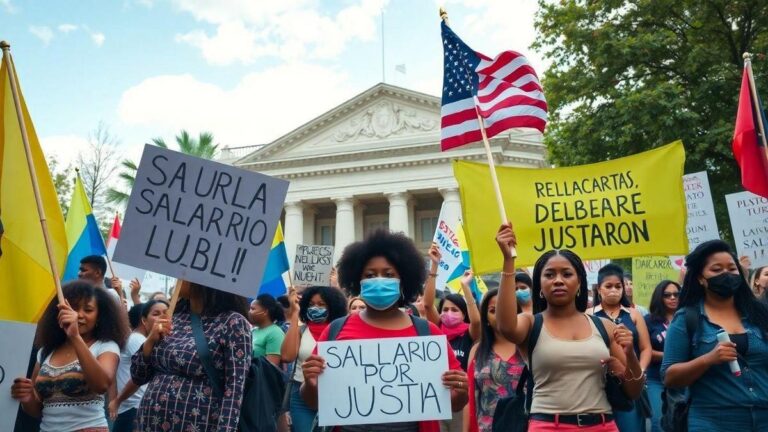
Various campaigns Protests have emerged in favor of an increase in the minimum wage. Many people believe that everyone deserves a wage that allows them to live with dignity. Movements have gained momentum, and several cities and states are responding.
Here are some states that have already implemented or are considering minimum wage increases:
| State | Current Minimum Wage | Proposed Increase |
|---|---|---|
| California | $15,00 | $17,00 |
| New York | $15,00 | $16,00 |
| Texas | $7,25 | $10,00 |
| Florida | $10,00 | $15.00 until 2026 |
What to Expect for the Minimum Wage in the Coming Years
The future of the minimum wage is uncertain, but some trends are clear. Pressure for increases is expected to continue, especially in states with high costs of living. The debate over a higher federal minimum wage is on the agenda, which could bring uniformity and ensure a minimum standard for all workers, regardless of where they live.
Many believe that raising the minimum wage could help boost the economy, allowing people to spend more, benefiting local businesses.