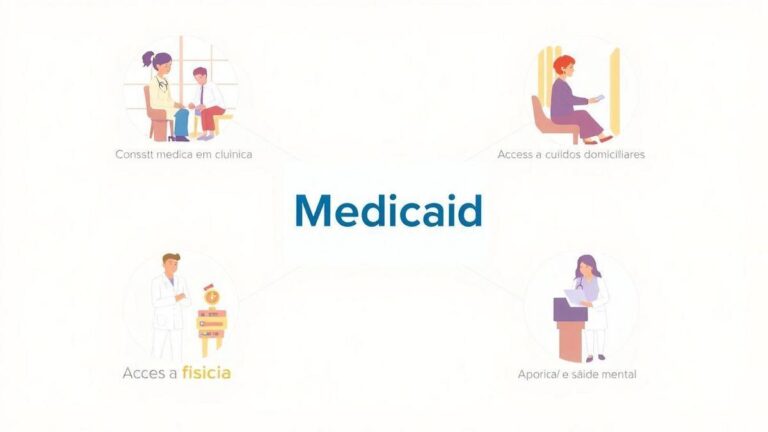
Medicare for the disabled in the United States: how to qualify before 65
Medicare for the disabled in the United States: how to qualify before 65 is a topic that can raise many questions. In this article, I'll explore everything you need to know about Medicare for the disabled. I'll talk about benefits, qualification requirements e coverage options. If you or someone you know has a deficiency and are under 65, this guide is to help you understand how access healthcare in an easier and more straightforward way. Let's go!
What is Medicare for the Disabled in the United States?
Understanding Medicare for the Disabled
O Medicare is a very important health program in the United States, which also extends to people with deficienciesThis means that if you have a condition that prevents you from working, you may be eligible for this program. Medicare for Disability Insurance guarantees access to medical care regardless of financial or health status.
To qualify, you must have specific qualifications. This generally includes having received benefits from Social Security for at least 24 months or have a specific condition, such as amyotrophic lateral sclerosis (ALS) or end-stage renal disease.
Medicare Benefits for the Disabled
Medicare benefits for people with disabilities are numerous and can make a huge difference in the lives of those in need. Here are some of the key benefits:
- Hospitalization coverage: Medicare covers hospital stays, which is crucial for those who need treatment.
- Medical care: Medical appointments and exams are covered, helping you stay healthy.
- Medicines: The program can also help with the cost of medications.
- Rehabilitation services: If you need physical or occupational therapy, Medicare can help.
How Medicare Helps with Healthcare
Medicare is a support network that eases the financial burden of medical care. For example, if you need surgery, Medicare covers a significant portion of the costs, making healthcare more affordable and less stressful.
Additionally, Medicare provides preventive services, such as vaccinations and routine checkups, that help detect health problems before they become more serious. This is especially important for those living with a disability, as they may be at higher risk for health complications.
Medicare Eligibility Requirements Before Age 65
Age and disability status
When I talk about Medicare for the disabled in the United States: how to qualify before 65, it's important to understand that age and disability status are key factors. Generally, people can enroll in Medicare when they turn 65. However, if you have a disability, you may qualify before that age.
THE deficiency may include conditions that affect your ability to work. For example, if you have a disease like multiple sclerosis or a serious heart condition, you may meet this criteria. The important thing is to have a medical evaluation that confirms your condition.
Documentation required for qualification
To qualify for Medicare before age 65, you'll need a few documents. Here are the main items you should gather:
- Medical record that proves your disability.
- Forms from the Social Security Administration (SSA).
- Personal identification, such as your ID or CPF.
These documents help demonstrate that you truly need Medicare and that you meet the established criteria.
Steps to prove disability
Proving a disability may seem complicated, but here are some steps that can make the process easier:
- Consult a doctor: The first step is to have a medical evaluation. Your doctor can help document your condition.
- Complete the SSA forms: Go to the Social Security Administration website and fill out the necessary forms.
- Send the documentation: Once you've gathered everything, submit the documents to the SSA. This can be done online or by mail.
- Wait for the answer: After submitting, you'll need to wait for the SSA's decision. This can take some time, so please be patient.
How to Enroll in Medicare for the Disabled
Simplified registration process
When it comes to Medicare for the disabled in the United States: how to qualify before 65, the enrollment process can seem complicated, but I'm here to help! First, you need to know that Medicare enrollment can be done online, by phone, or in person. Here's a simple step-by-step guide:
- Check your eligibility: To qualify, you must have a disability diagnosis and have received Social Security benefits for at least 24 months.
- Visit the Medicare website: Go to the official Medicare website. That's where you'll find all the information you need.
- Fill out the registration form: You can do this online. It's really easy! Or, you can call Medicare or visit a local office.
- Wait for confirmation: After submitting your application, you will receive a letter confirming your membership.
Deadline to Enroll in Medicare
Deadlines are super important! For people with disabilities, Medicare usually begins automatically after 24 months of receiving Social Security benefits. But if you're unsure, it's a good idea to keep an eye on the dates. Here's some helpful information:
| Registration Type | Term |
|---|---|
| Automatic Registration | After 24 months of benefits |
| Voluntary Registration | During the Open Enrollment Period (January 1st to March 31st) |
Tips to avoid registration errors
Mistakes can happen, but here are some tips to help avoid problems:
- Read everything carefully: Before submitting, please check that all information is correct.
- Have your documents at hand: This includes your Social Security number and any documentation related to your disability.
- Ask for help if you need it: If you feel lost, don't hesitate to ask friends or even professionals who understand the subject for help.
Medicare Coverage Options for the Disabled
Plans available for people with disabilities
When we talk about Medicare for the disabled in the United States, it's important to know that there are several coverage options. Plans are tailored to meet the needs of those with disabilities. You can choose from different types of plans, such as:
- Medicare Part A: Covers hospitalizations and institutional health services.
- Medicare Part B: Covers medical consultations, exams and other outpatient services.
- Medicare Part C (Medicare Advantage): Combines Parts A and B and may include extra benefits such as vision and dental.
- Medicare Part D: Focuses on prescription drug coverage.
These options may seem confusing, but I'm here to help you navigate the path!
Differences Between Medicare Part A and Part B
Now, let's take a look at the differences between Medicare Part A and Part B. Here's a simple table to make it easier:
| Coverage | Medicare Part A | Medicare Part B |
|---|---|---|
| Hospitalizations | Yes | No |
| Medical appointments | No | Yes |
| Exams | No | Yes |
| Home care | Yes | No |
| Prescription medications | No | No (separate coverage in Part D) |
As you can see, each part has its own focus. Part A focuses more on hospitalizations, while Part B covers office visits and exams.
How to choose the best plan for your needs
Choose the best plan It may seem like a big challenge, but it doesn't have to be! Here are some tips to help:
- Assess your health needs: Think about the doctor's appointments you make and the medications you need.
- Compare plans: See what coverage each plan offers. Don't hesitate to ask questions!
- Consider the cost: Analyze monthly premiums, copays, and deductibles. Sometimes the cheapest option isn't the best option.
- Ask for help: Talk to friends or family who have been through this or consult a Medicare specialist.
Remember, choosing a health plan is an important decision and should be made calmly and carefully.
Additional Medicare Benefits for the Disabled
Access to mental health services
When I think about mental health, I realize what it's like important have access to services that help you cope with everyday challenges. Medicare offers a variety of mental health services for people with disabilities, allowing me to seek support when needed. This includes consultations with psychiatrists, psychologists, and therapists. I can feel more secure knowing that these services are available and that I can count on qualified professionals to help me.
Coverage for therapies and rehabilitation
Another advantage that Medicare gives me is coverage for therapies and rehabilitationThis is crucial, especially if I'm recovering from an injury or facing disability-related challenges. Medicare covers treatments like physical therapy, occupational therapy, and speech therapy. This means I can access treatments that truly make a difference in my life!
| Type of Therapy | Medicare Coverage |
|---|---|
| Physiotherapy | Yes |
| Occupational Therapy | Yes |
| Speech therapy | Yes |
Importance of regular medical follow-up
Finally, I cannot fail to mention the importance of regular medical follow-upWith Medicare, I have the opportunity to have routine checkups and checkups. This helps me monitor my health and detect problems before they become serious. Maintaining an open dialogue with my doctor is essential to ensuring I'm on the right track.
Resources and assistance for understanding Medicare
Where to find reliable information
When it comes to Medicare, finding reliable information is essential. I always recommend starting with the official website. MedicareThey have a dedicated section explaining everything from what Medicare is to how to enroll. You can also call 1-800-MEDICARE. They have people ready to help, which can be a relief when you're full of questions.
Another option is to visit local libraries or community centers. They often have brochures and even workshops about Medicare. This can be a great way to learn in a friendly environment.
Organizations that help navigate Medicare
There are several organizations that can help you understand and navigate the system. MedicareHere are some that I find useful:
- AARP: Offers many resources about Medicare, including guides and videos.
- Medicare Rights Center: This organization is great for those who need specific help. They have counselors ready to answer questions.
- State Health Insurance Assistance Program (SHIP): Every state has a SHIP program that provides free, impartial Medicare assistance.
These organizations have professionals who can simplify information and help you make more informed decisions.
How to Get Free Help with Medicare Questions
If you have any questions about the Medicare, there are several ways to get free help. Here are some tips:
- Call 1-800-MEDICARE: As I mentioned before, they have representatives who can answer questions.
- Visit a local SHIP center: They offer free consultations.
- Attend webinars or workshops: Many organizations hold online events that explain Medicare in a simple and straightforward way.
These resources are like lighthouses in a dark night, guiding you through the complexities of the healthcare system.